Why Your Brilliant Post Flopped and That Dumb Meme Has 2 Million Views
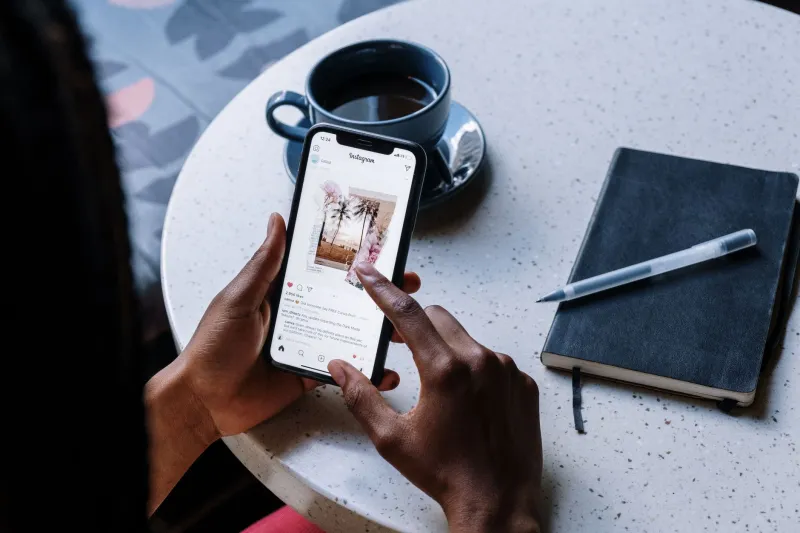
Let's set the scene. You stayed up late. You edited. You rewrote the caption four times. You even did the thing where you post, immediately delete, tweak the thumbnail, and repost because the first version felt slightly off. You hit publish, put your phone down with cautious optimism, and woke up the next morning to... 47 likes and a comment from your aunt saying "so proud of u!!!"
Meanwhile, somewhere across the internet, a college kid filmed himself dropping a waffle on the floor and whispering "nooo" in slow motion. That video now has 2.3 million views, a Reddit thread, and a sponsored deal from a breakfast syrup brand.
Welcome to what we at Yutee007 are calling the Attention Span Tax — the invisible toll the internet charges every piece of content that dares to ask too much of its audience.
Your Brain on the Scroll
Here's the thing nobody wants to admit: human brains are not optimized for quality. They're optimized for speed. When someone is scrolling at 11:47 PM half-watching a Netflix show they've already seen, their brain is essentially running in power-saving mode. It's not evaluating your content. It's pattern-matching.
Research in cognitive psychology (the kind that keeps marketing people employed) consistently shows that people make micro-decisions about content in under two seconds. Not two minutes. Not two sentences. Two seconds. In that window, your brain isn't asking "is this good?" It's asking "is this safe, familiar, and emotionally immediate?"
A waffle hitting the floor is emotionally immediate. Your thoughtful breakdown of why creative burnout is underrepresented in digital spaces? That requires a person to stop, focus, and care — three things that are genuinely hard to do while also half-watching Suits reruns.
The Algorithm Isn't Evil — It's Just a Mirror
Everyone loves to blame the algorithm like it's some shadowy villain twirling a mustache in a server room. But here's the neutral truth: algorithms don't pick winners. They amplify what's already winning. And what "wins" in the first hour of a post's life is almost entirely determined by that two-second pattern-match happening in the brains of real humans.
If your post doesn't get early traction — comments, saves, shares, watch time — the algorithm reads that as a signal that the content isn't resonating and quietly buries it. It's not personal. The algorithm is essentially a bouncer who only lets in the people who already have a crowd around them.
This creates a brutal feedback loop: good content that requires effort to appreciate gets buried before it ever reaches the audience that would appreciate it. Low-effort content that delivers instant emotional hits gets pushed to everyone. The mediocre stuff isn't winning because people prefer mediocrity. It's winning because it clears the two-second threshold faster.
The Quality-Virality Gap Is Real, and It's Not Going Away
Here's where a lot of creators get it twisted. They assume that if something is genuinely great, the internet will eventually find it. Like, "good content rises to the top" is a thing people actually believe. And look — sometimes it does. But more often, quality without packaging just sits there collecting digital dust.
The creators who consistently build audiences aren't necessarily making the best content. They're making content that is immediately legible. There's a difference. Legible content tells you what it is, why you should care, and what you're going to feel — all before you've committed to watching or reading.
Think about the format of a viral TikTok versus a genuinely insightful YouTube essay. The TikTok front-loads the payoff. The essay asks you to trust that the payoff is coming. On the modern internet, trust is a luxury most viewers won't extend to a stranger.
So What Should You Actually Optimize For?
Okay, so if chasing virality is a trap and quality alone isn't enough, what's the move? Glad you asked, because this is where it gets actually useful.
1. Optimize for the first five words. Whether it's a caption, a headline, or the opening line of a video, the first five words carry a disproportionate amount of weight. They're the thing people see before they decide to stop scrolling. Make them do work.
2. Stop optimizing for the algorithm and start optimizing for your audience. A smaller, more engaged audience that actually shows up for your content is worth ten times more — creatively, financially, and mentally — than a viral spike that brings in a million people who leave immediately. Build for the people who stay, not the people who click.
3. Package your best ideas in your most accessible format. If you have something genuinely smart to say, don't just say it. Frame it. Give it a hook. Put it in a format that clears the two-second threshold. Good ideas deserve good packaging. That's not selling out — that's just communication.
4. Play the long game without losing your mind. Consistency compounds in ways that virality doesn't. The creator who posts thoughtfully three times a week for two years will almost always outperform the creator who went viral once and then burned out trying to recreate it. Boring advice, but it's true.
The Uncomfortable Punchline
Here's what nobody wants to put on a motivational poster: the internet doesn't owe your good content anything. The attention economy is not a meritocracy. It never was. The people who thrive in it aren't necessarily the most talented — they're the ones who figured out how to make talent legible, fast, and emotionally immediate without hollowing out everything that made the content worth making in the first place.
Your brilliant post flopped because it asked too much of strangers at the wrong moment. That doesn't mean it wasn't good. It means the packaging needed work, the timing was off, or the audience that would love it just hasn't found you yet.
Keep going. Package better. And maybe, just maybe, also film yourself dropping a waffle every once in a while. For reach.