Posting at 3 AM Won't Save You — But Sleep Might
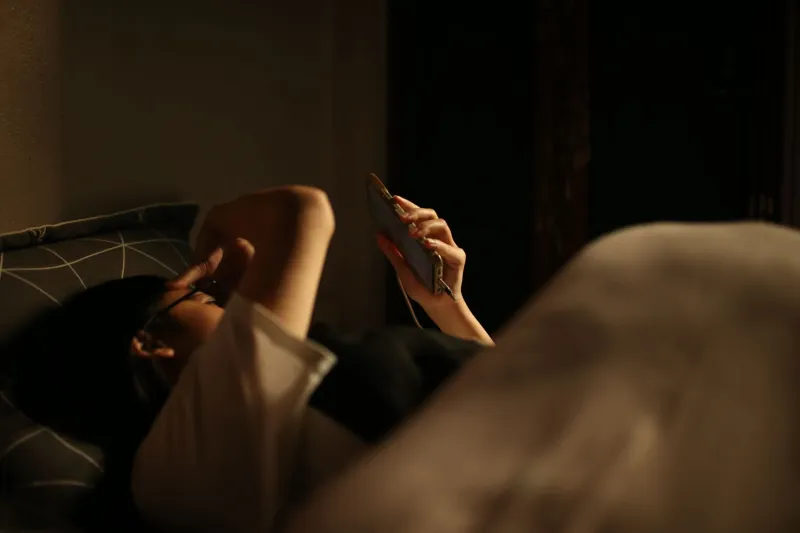
Let's paint a picture. It's 2:47 AM. You're horizontal in bed, one eye open, phone hovering six inches above your face. You've got a piece of content you know is good — like, genuinely good — and you're watching a countdown on some scheduling app like it's New Year's Eve in Times Square. The moment hits. You post. You put the phone down. You pick the phone back up eleven seconds later. Fourteen likes. You spiral.
Welcome to the Timestamp Trap, population: way too many of us.
The Myth of the Magic Window
Somewhere along the way, the internet convinced creators that there exists a golden, sacred window of time — usually floated as somewhere between 6–9 PM on weekdays, or Tuesday mornings, or whenever Mercury is in retrograde — during which posting guarantees maximum reach, engagement, and the kind of viral moment that pays your rent for three months.
And look, timing does matter. Kind of. A little. In specific contexts. But the way creators have weaponized that nugget of truth into a full-blown anxiety disorder is something else entirely.
The reality? Platform algorithms in 2024 are sophisticated enough to surface your content to your audience over a rolling window — not just in the first 90 seconds after you post. Instagram, TikTok, and YouTube have all quietly shifted toward longer content distribution cycles. That post you drop at 11 PM on a Thursday? It might actually pop off Friday afternoon when your followers are doom-scrolling during their lunch break. The algorithm is working a longer shift than you are.
What You're Actually Losing at 3 AM
Here's the part nobody's putting in their "posting schedule tips" carousel: chronic sleep deprivation is actively making your content worse.
Not metaphorically. Literally. Cognitively. When you're running on four hours of sleep and three cups of cold brew, your creative judgment degrades. You second-guess captions that are actually fine. You overthink thumbnails. You convince yourself a mediocre draft is brilliant because your brain is too tired to tell the difference. And then — in the cruelest twist — you post that half-baked content at precisely the "optimal" time and wonder why it didn't land.
You optimized the when and completely torched the what.
There's also the emotional cost. Creators who tie their sleep schedule to their posting schedule often report a kind of low-grade dread that follows them around constantly. There's no real off-switch. A Sunday afternoon with friends becomes a mental negotiation about whether you should be filming. A vacation turns into a content trip with worse lighting. You're never fully present anywhere because part of your brain is always running engagement projections.
That's not a hustle. That's a haunting.
The Creators Who Quit the Clock
Some of the most followed people on the internet have made a conspicuously quiet exit from the timestamp obsession — and their numbers didn't collapse. They stabilized. Sometimes they grew.
Creators across YouTube and TikTok have spoken openly in interviews and podcasts about stepping back from rigid posting schedules after burnout forced their hand. The common thread in their stories? When they stopped posting reactively — chasing windows, trends, and optimal moments — and started posting intentionally, their audience actually responded better. Not because the algorithm rewarded them, but because the content was better. Rested, considered, genuinely made with some enthusiasm behind it.
Audiences can feel the difference between something someone was excited to make and something someone made because the scheduling app said it was time.
So When Does Timing Actually Matter?
Fair question. Let's not throw the whole clock out.
Timing legitimately matters in a few specific scenarios:
Breaking news or trending topics. If you're a commentary creator and something massive just happened culturally, yes — being early matters. Speed is part of the value you're providing.
Live content and stories. These formats have a real-time shelf life, so posting when your audience is awake and scrolling makes obvious sense.
Your specific niche audience's habits. A creator whose audience skews toward working parents will have different peak engagement windows than someone whose followers are mostly college students. Know your people, not just the general best-practices advice floating around Twitter.
Outside of those scenarios? The difference between posting at 6:30 PM and 8:45 PM is probably not what's standing between you and your breakthrough moment. Your content is.
The Reframe You Actually Need
Stop asking "when should I post this?" before you've asked "is this actually ready to post?"
The timestamp obsession is, at its core, a displacement behavior. It's easier to optimize a variable you can control — a time slot on a calendar — than to sit with the uncertainty of whether your creative work is good enough. Fiddling with your posting schedule feels productive. It gives you something to do with the anxiety. But it's a decoy.
The creators who consistently win over time are not the ones who cracked some secret timing algorithm. They're the ones who showed up with something worth watching, repeatedly, over a long enough period that people started trusting them. That's it. That's the whole thing.
You can't schedule your way into that. But you can sleep your way closer to it.
Yutee007's Unsolicited Advice (You're Welcome)
Post when the content is good and you're awake enough to actually care about it. If that's 7 PM on a Tuesday, great. If that's 11 AM on a Saturday because that's when you finished editing and you're genuinely proud of it — also great.
Your audience will find it. The algorithm will eventually show it to them. And you'll have gotten some sleep, which means tomorrow's content will be better too.
The timestamp trap is real, but the exit door is just your bed. Go use it.