Stop Trying to 'Be Real' Online — The Algorithm Was Never Rooting for You Anyway
Somewhere between your third crying selfie and your heartfelt 3 a.m. caption about "finally choosing yourself," you started to wonder why the engagement looked like a ghost town. Eleven likes. Two comments — one from your mom, one from a spam account selling crypto. And you just poured your entire emotional skeleton onto the internet.
Here's the uncomfortable truth nobody in the creator space wants to say out loud: the algorithm does not have feelings. It was not moved by your vulnerability. It did not slow down, put a hand over its chest, and think wow, this person is so real. It looked at your post-time, your hashtag density, your watch duration, and your engagement rate — and it made a cold, clinical decision to bury you on page seven of someone's For You Page, right between a video of a golden retriever and an ad for a mattress.
And weirdly? That's kind of freeing.
The 'Just Be Yourself' Advice Is Costing You Clicks
The wellness-to-content pipeline has sold an entire generation of creators on the idea that radical authenticity is both a moral virtue and a growth strategy. Be vulnerable. Show the messy parts. Let people see the real you. And look, that's great advice for therapy. For your journal. For a long phone call with your best friend at midnight.
For building an audience on a platform that runs on dopamine mechanics and 0.3-second scroll decisions? It's roughly as effective as handing out business cards at a concert nobody's attending.
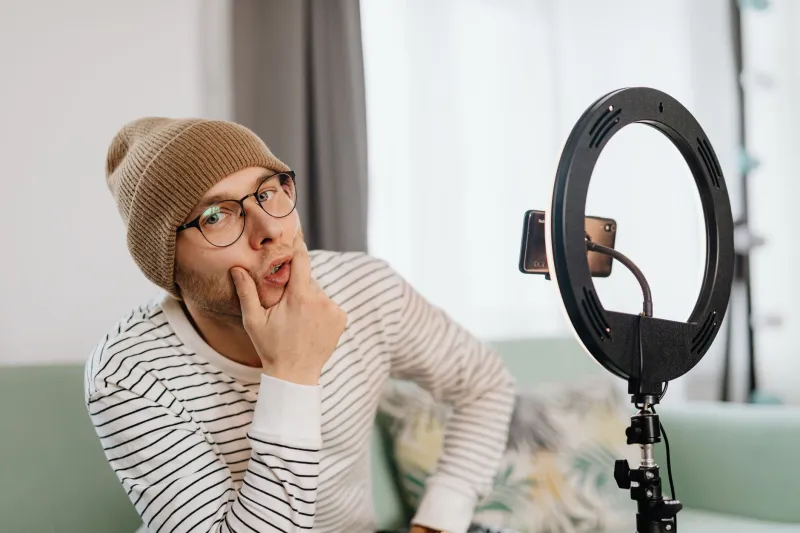
The problem isn't that authenticity is bad — it's that authenticity alone is not a content strategy. There's a reason your favorite creator who swears they "just post whatever feels right" also has a content calendar, a ring light, and a very specific posting window they never miss. The vibe is curated. The schedule is not accidental. The "unfiltered" moment was filmed four times before they got the lighting right.
Consistency Is the Cheat Code Nobody Wants to Admit
Algorithms — whether we're talking TikTok, Instagram Reels, YouTube Shorts, or whatever platform just launched by the time you're reading this — are fundamentally pattern-recognition machines. They are looking for signals that tell them: this account is reliable, this content keeps people watching, this creator shows up.
Consistency signals reliability. Timing signals intention. Strong hooks signal respect for the audience's attention. None of these things require you to bare your soul. They require you to show up, on schedule, with content that earns the next two seconds of someone's attention.
The creator who posts three times a week at 6 p.m. EST with a clear niche and a punchy hook will almost always outperform the creator who posts whenever the spirit moves them with deeply personal content that meandered for four minutes before getting to the point. The algorithm isn't judging the content's emotional honesty. It's grading it like a pop quiz: did people stay? Did they engage? Did they come back?
Strategic Curation Isn't Selling Out — It's Actually Respect
Here's the reframe that might blow your mind a little: choosing what to share, how to frame it, and when to post it isn't fake. It's editing. Every author does it. Every filmmaker does it. Every comedian who seems "effortlessly real" on stage has run those bits in front of a mirror approximately four hundred times.
When you stop treating every post like a confessional booth and start treating your content like a show you're producing, something interesting happens. The pressure drops. You're no longer asking the internet to validate your emotions in real time. You're crafting something, and that craft has its own kind of integrity.
You can still be you — your humor, your perspective, your weird niche obsessions — without handing the algorithm a raw, unedited download of your inner life and hoping it reciprocates with reach. Pick the parts of yourself that translate. Build around those. Let the rest stay yours.
So What Do You Actually Do With This Information?
Glad you asked. A few moves worth making:
Audit your posting patterns before your posting content. Before you rewrite your entire personality, look at when you're posting and how consistently. Fix the schedule first. You'd be surprised how much that alone changes your numbers.
Find your hook before you find your heart. The first three seconds of your content have to earn the rest. Lead with something that creates a reason to keep watching or reading — a surprising statement, a relatable situation, a question that demands an answer. Then bring in the depth.
Curate a persona, not a performance. There's a difference between crafting a public-facing version of yourself that's strategic and lying to people. Pick the true parts of you that actually make for compelling content, and lean into those intentionally. That's not inauthenticity — that's professionalism.
Let go of the posts that didn't perform. Not every vulnerable moment deserves an audience, and an audience not showing up doesn't mean your feelings aren't valid. It might just mean the format didn't match the platform. Separate your self-worth from your analytics. Seriously. That's a whole thing.
The Actual Liberation
The weird gift hiding inside "the algorithm doesn't care about your authenticity" is this: you don't have to perform emotional rawness to earn your place online. You don't owe the internet your most unguarded moments just to grow a following. You can be strategic, intentional, and still completely genuine — because the version of you that shows up prepared, consistent, and clear about what you're offering is also a real version of you.
Maybe the most authentic thing you can do is stop pretending that posting without a plan is somehow more honest than posting with one.
The algorithm doesn't care either way. But your future audience might.