Your Finsta Is Lowkey Your Most Powerful Career Move Right Now
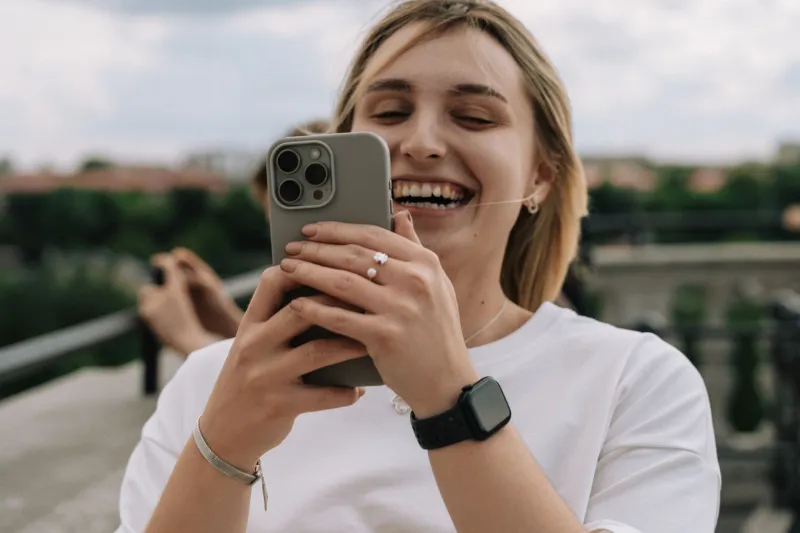
Let's set the scene. You've got your main Instagram — curated grid, strategic captions, a highlight reel that makes your life look like a Pinterest board came to life. Then you've got the other one. The one with fourteen followers, a username like 'notactuallykayla,' and a photo dump that includes a blurry video of you crying at a Taco Bell at 11:47 PM because they were out of the Chalupa. Classic.
Here's the twist nobody saw coming: that second account? Brands want it. Recruiters are sniffing around it. The internet has officially flipped, and your unfiltered, chaotic little corner of social media is suddenly the most valuable real estate online.
Welcome to the Finsta Economy. Population: everyone who thought they were hiding.
The Polished Persona Is Running Out of Steam
Somewhere around 2019, people started getting suspicious of perfection. The influencer aesthetic — ring lights, matcha lattes, 'use code KAYLA for 15% off' — started feeling like a hostage video where everyone was smiling just a little too hard. Audiences began clocking the performance, and engagement rates on hyper-produced content quietly started tanking.
Meanwhile, something weird was happening in the shadows. People with small, private accounts were building some of the tightest communities on the internet. Sixteen followers who actually showed up. Friends who sent voice memos in response to posts. Inside jokes that spanned three years of photo dumps. That's not an audience — that's a cult, and in the best possible way.
Brands noticed. Of course they did. Because brands always notice when authenticity starts outperforming advertising.
Privacy as a Power Move
Here's the paradox that makes this whole thing kind of hilarious: the less accessible you make yourself, the more desirable you become. It's the velvet rope effect applied to your social media strategy, and Gen Z figured it out without even trying.
The multi-account lifestyle — a public-facing main, a close-friends-only finsta, maybe a spam account, possibly a dedicated account for a niche hyperfixation — isn't just about compartmentalizing your personality. It's about controlling the narrative. When you decide who gets access to the real you, you're not being secretive. You're being selective, and selective is the new premium.
Micro-influencers with private accounts and under 5,000 followers are landing brand deals because their engagement rates are genuinely insane. When 400 out of your 600 followers are actively liking, commenting, and DMing you, that's a conversion rate that a celebrity with 3 million passive followers would be embarrassed to admit they can't touch.
The Authenticity Arms Race
Marketing teams are out here running what can only be described as authenticity archaeology. They're not just looking for someone with a big number next to their follower count anymore. They want someone whose followers actually trust them. Someone who posts a photo of their genuinely ugly apartment and gets seventy-three comments from people saying 'this is SO your vibe.' That kind of trust is not manufactured in a content studio — it grows in the weird, low-stakes environment of a finsta.
The cultural shift is real. Glossy is out. Gritty is in. 'Authentic' has become such a marketing buzzword that it's almost lost meaning — except that audiences can still tell the difference between performed authenticity and the genuine article. And your finsta, for all its chaos and bad lighting, tends to be the genuine article.
So What Do You Actually Do With This Information?
First, don't panic and start treating your finsta like a content strategy document. The second you start optimizing it, you kill the thing that makes it valuable. That's the cruel irony of the whole situation.
What you can do is start thinking about how your private, authentic voice translates into a public-facing presence that doesn't feel sterile. The lessons from your finsta — the humor, the honesty, the willingness to post a bad selfie and write a caption that's actually funny — those are transferable skills.
You can also stop apologizing for the multi-account strategy. Having a public presence and a private one isn't two-faced. It's called having boundaries, and in an era where the internet forgets nothing, protecting a corner of your online life for the people who actually know you is genuinely healthy behavior.
And if a brand ever slides into your finsta DMs? Congratulations. You've accidentally built something that the marketing industry has been trying to manufacture for years. Play it cool. Negotiate your rate. And maybe clean up that Taco Bell video first.
The Bottom Line
The finsta was never really fake. It was just honest in a space where honesty felt risky. Now that risk has become a commodity, and the people who were just trying to have one account where they didn't have to perform are sitting on an asset they didn't even know they were building.
The internet is full of surprises. Sometimes the most valuable thing you've got is the thing you thought you were hiding.
Keep it weird. Keep it real. And maybe keep the follower list tight — turns out, that's the whole point.